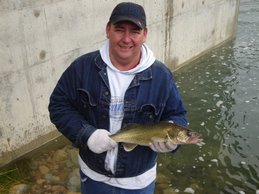
The sun is shining. The air is cool and crisp. Yes, this is a great time for fishing.
As you come to the edge of a swiftly moving stream, you see a great fishing adventure beckoning. You set down your tackle box and your rod and reel, slip off your waterproof jacket, and slip on a pair of hip waders over your fisherman's vest.
The abovementioned are just a few of the many fishing accessories that are available to you from stores, catalogs and the internet. Read on to learn more about the accessories you need to make fishing even more fun.
The Fishing Basics
The backbone of your fishing equipment is your rod and reel. For the casual fisherman, the basic rod and reel is all you need. Once you are more experienced, you will better know your tastes and can upgrade accordingly.
Tackle ranges from simple to extremely complicated. Basic tackle includes hooks, sinkers, bobbers, fishing line and needle nosed pliers.
A net is also a good addition. Choose a net size based on the fish size that you are after.
High Tech Tools
Electronics have, to the alarm of purists, invaded the fishing arena. There are devices that help you locate where the fish are located. And there are alarms to alert you when you have a fish on your line. Those poor fish won't have a chance.
Clothing For Anglers
Fishermen's clothing necessities include a fishing hat and sunglasses to protect you from the sun. A fishing vest with lots of pockets comes in very handy. A good waterproof jacket is essential for keeping you dry when the weather isn't. Waders, in thigh or chest height, help extend your reach by getting out into the water.
Other Useful Accessories
You should also consider: a tackle box, forceps, fishing knife, scissors, flashlight, wading shoes, and a fishing belt. If you are fishing from a boat, you will need a flotation vest.
Get Advice Before Buying
Before choosing expensive accessories, be sure it is right for the job and right for you. There are many factors to consider, so don't hesitate to talk for help. Someone with experience, either a friend or a salesperson, can quickly help you assemble a set of fishing accessories that will maximize your fish catching odds.
The right accessories will make your fishing experience more successful, and hence, more enjoyable.
Thanks Dale
http://dalesblogs.blogspot.com/
http://unityblog1.blogspot.com/
http://unityberrytree.blogspot.com/
http://junk-email.blogspot.com/
Showing posts with label Large. Show all posts
Showing posts with label Large. Show all posts
Tuesday, August 21, 2007

Friday, July 27, 2007
Actually Fishing Is Fun
Fishing is a fun and tranquil sport that lets you spend quiet time with your friends, family and with Mother Nature.
Fresh water fishing is a sport involving the catching of fish in lakes, rivers and streams. It involves a lot of patience, challenge and a lot of acquired skill over time. Anyone can participate in this fun activity, including the kids.
To start, you have to check your State’s fishing requirements and make sure if a license is needed for you to fish. If it is required, you must acquire one by checking with a sporting goods store. They will help you how to get it, and some will even provide it for you.
During the time that you are in your favorite sporting goods store, you can look around and buy the right fishing equipment that you will be need for your trip. Considering that you are a beginner, make sure that you budget well the cost and your spending on the equipment, not deciding on expensive equipments; buy only the basic things you will need.
When in doubt as to what is needed, ask the help of the store keeper, but do keep in mind that you need to stick to a budget. Take your time and don’t hesitate to ask how to use each piece of equipment that is offered to you. Artificial lures for bait can be used or you can simply look for worms from your back yard.
An inexpensive fishing rod and reel will be enough along with a fishing line, hooks, weights, a bobber (this keeps your line afloat), fishing lures and net. A polarized sunglass is also essential, as it will help to see clearly through the water and lessen the glare.
Then if you don’t know the good locations to fish, ask about local “hot” spots, or check your State’s fishing regulations for information about fishing locations around your State.
The time will surely come when you will be a better fisherman; then you may decide on upgrading your equipment. In the meantime, keep things simple.
It is always advised that you avoid fishing alone. Always be with a friend, as when emergency strikes, there can be someone who can call for help.
It is wise to start fishing in shallow waters. Aim your cast in shady or rocky areas where the water is deep, as this is where the fish is expected to be found. Keep in mind that this is all practice first.
As your skill level develops and increases, you can then attempt into deeper waters. But before going, take the time to practice casting to familiarize yourself with your rod and your reel.
What better place to practice than your back yard. To do so, mark off an area using a rope and use this as your guide in aiming your cast. Rehearse and study your movements to discover a method that will work for you. Bear in mind, cast with your wrist, and not with your arm.
Fishing hooks are very sharp and needed to be handled with care to avoid injury. Before casting, it is important that you should look around you and stay unobstructed to avoid hurting other people with your hook.
When the right time has come and you go fishing for real, keep in mind to cast your line always ahead of the fish, making your bait land slowly, with as little splash as possible. The fish will see well at a close point, but cannot see behind.
If your casts are going in a disorganized manner, move closer to the water so you can gain better accuracy.
Watch the bobber closely for any movement. If and when a fish grabs the bait, the bobber will be pulled under water. This signals that you got a fish on the line. Don’t get too excited. Remain calm.
Keeping your line tight, slowly reel in your catch. Place the net near and use it to bring the fish out. Remove the hook from the fish with great care.
If you got an undersized fish (as noted in the state’s regulation book), quickly return it to the water. Likewise, if you have no intention in eating your catch, do not waste it and return it to the water. Releasing the fish will supply the water with more fish, giving future fishermen the thrill to experience a catch.
Lastly, look around you and feel the calm, restful and serene view of the river.
Have fun!
Thanks Dale
Tuesday, June 19, 2007
Large Mouth Bass
Fishermen from Cuba to Canada get utterly excited every time a largemouth bass strikes their hook. The fish leaps out of the water, mouth open trying to shake the hook out of its mouth and often it does.
The largemouth bass has become one of the most widely fished species in the world. This is because bass are so easy to find because of their great ability to survive any where they may be located. You will find these fish as far north as northern Canada in the great lakes; you will find them in murky back waters, small ponds and even great spawning reservoirs in Mexico.
A few other names for large mouth are Black Bass, bucket mouth or sunfish. Large mouths are actually a member of the sun fish family. Bass fan out shallow in saucer shaped nests in the spring. They usually travel in water between 2 to 4 feet deep. They spawn in bays, cuts or channels and rough water often washes away their nests.
Large mouths usually spawn when the water warms to the low- to mid-60s. Depending on where the bass are they can lay their eggs anywhere from February to mid-June. After dropping her eggs the female usually abandons the nest leaving the male there to guard until the young bass can fend for them selves. Male bass will usually strike at anything that comes near the nest. For this reason some places close fishing in certain spawning areas while the nesting season is going on.
Bass can adapt to almost any foods. That’s why they can adapt well in many bodies of water around the world. Small fish, crayfish, frogs, insect larvae, snakes, turtles, mice and even birds have been found in the stomachs of bass.
Because bass don’t like bright sunlight they usually feed early in the morning or late in the evening during the summer time. During the day they usually hang out in drop offs close to feeding areas. Fishing for bass is usually great on rainy days. Depending where you fish large mouth bass can be caught anywhere from 1 pound to 20 pounds with the world record being 22 pounds, 4 ounces in Montgomery Lake, Georgia in 1932.
Dale Mazurek
Dale is an expert self taught fisherman who has won many amateur tournaments and he has fished all over. You can check out any of his wonderful books that he promotes at http://stcajo.troutfish.hop.clickbank.net/ or http://stcajo.flyfish1.hop.clickbank.net/ and http://stcajo.betterbass.hop.clickbank.net/
Subscribe to:
Posts (Atom)