When fishing in Alaska timing is everything. In other words each species of fish has a time when they are most available and when there is an abundance of that particular fish. When booking a reservation with one of the resorts, check to see if the fish you want to catch are available during your visit.
Besides seeing the sights and experiencing seasonal changes in weather there is just plain relaxing. Consider stopping at the nearest Alaska fishing lodge. There are so many packages available and so many offers that you surely will find one for your family.
A great Alaska fishing lodge is one that offers all the amenities with easy access to the water. Any package should include close proximity to the oceanfront lodging, great meals, guide services and fish processing. So you get everything you need all in one trip. There are many choices in fishing lodges. Alaska also offers a great variety and quantity of fish to be caught. They can be caught in different regions of the state and at various seasons. Alaska most popular fish is the salmon and the runner up is halibut. In the South central region there are various choices of fishing lodges. First, Alaska Tree Tops Fishing Lodge. Then there is Alaska Accommodations and Fishing Charters, Alaska Adventure Company, LLC Wilderness Place Lodge. In the southeast region there are several selections in lodges such as Alaskan Advantage and Shelter Cove Lodge and Salmon Falls Resort. The southwest offers the Alaska Rainbow Lodge. There are many more selections of Alaska fishing lodges that are available. By searching the web or logging onto cleverfishing.com you may find out which lodge is best to suit your needs and who offers the best package and pricing.
Alaska Fishing Lodges are perfectly located in areas where the waters are abundant with the different species of fish. Usually, these lodges are situated in a place where trout, northern pike, and grayling mostly inhabit the waters.
Moreover, some types of lodge also house a place where king salmon are abundant especially during the months of June and early part of July. Most lodges also provide a wide variety of fishing equipment, from rods to tackles and lines.
Most fishing lodges offer valued deals on shelter, food, and fishing equipment rentals. How can you select what is best for you? Decide on what region has the fish you are looking to catch. Pricing varies on lodges, regions, seasons and packaging. A package can start from $75 and range up to thousands of dollars. Guides are included in these packages to show you the region and where the fish reside, how to catch them best and when is a good time to go fishing.
Alaska fishing lodges are fully staffed with professional fisherman who have been guiding on fishing subjects for many years. They love fish and will give the best fishing experience to maximize your chance for success. This should keep you coming back for more. Alaska fishing lodges offer stays from four to seven nights and offer a variety of options to meet the clients needs and desires. Most of the lodging are owned and operated by Alaskan residents.
Most Alaska Fishing Lodges are built big enough to occupy 16 guests, in which each guest can avail of personal and individualized services. In addition, because it carries the true Alaskan heritage, Alaska Fishing Lodges offer services and products that can be afforded by anyone. With its affordable rates, the place is inhabited by people, who mostly want to enjoy life and fishing but cannot afford to buy the pleasures in expensive beaches and lodges.
Normally, Alaska Fishing Lodges are made up of logs; sturdily build to provide each angler optimum convenience and comfort. It is known for its spacious interiors, creatively decorated with the right embellishments, thereby, setting the mood for fishing and wilderness.
Among all fishing lodges available in the industry today, the Alaska Fishing Lodges are among the most treasured and most popular fishing lodges in the United States. With all these beautiful features present in every Alaska Fishing Lodge, there is no better place to enjoy fishing and the wilderness like what this particular lodge can offer. Staying in an Alaska Fishing Lodge is, indeed, an ultimate fishing experience.
FREE REPORT: The Clever Way To Plan and Budget the Fishing Trip of Your Dreams. EBOOK: Everything Clever You Ever Wanted To Know About Fishing
Thanks Dale
http://dalesblogs.blogspot.com/
http://unityblog1.blogspot.com/
Friday, July 13, 2007

Monday, July 9, 2007
The Art Of Dry Flies
A fisherman that fly fishes knows the most fun comes from dry fly fishing. In this article I hope to enlighten all of you with some favourite techniques.
Watching the fly drift on the water, the flash of the trout grabbing it and then the bend in your fly rod. This is exactly what all fly fishermen hope to experience. Just to get this experience most fly fishermen will go to extreme measures to make this happen. Sure most guys don’t mind taking a big old rainbow or brown on a nymph but catching that brookie on a dry fly is usually always preferred.
When I first get to the stream I am going to fish I put on a nymph. The reason for this is that I can be catching fish while I am paying attention to what’s going on, on the top. When I finally see what’s going on than its time to switch to a dry fly and have lots of fun.
Your equipment choice is very important. I suggest using as long of a rod as possible. For some reason some fishermen like to use shorter rods but I can’t think of a better feeling than the fight of trout fighting on a long rod.
It is also best to use a large arbour reel. A large arbour reel keeps your fly line supple, without curls from tight diameter storage. A fine drag system or none at all is important to protect the tippet from breaking when the fish runs. Something else that’s important is good rod balance. The reel weight must make the fly rod by the cork grip balance. If you have the right balance casting will feel second nature. Once you have the right balance you will be able to feel your fly trailing on the leader.
Understanding these aspects of fly fishing really is not difficult. It does take time and practice. With the practice you will get to the point where you understand all aspects of your equipment and the details of your techniques. If you keep going after trout, especially with a fly rod then chances are you will never go back to spinning equipment.
It’s going to take hours and hours of practice. I remember practicing my casting at the local park so that I could just focus on casting instead of worrying about the water. Fly fishing when mastered is an art that really can be mastered by anyone.
Dale Mazurek
Dale is working on making a career on line. Himself and his partner have teamed up to help build the largest, honest and most profitable organization on the internet. You can check out how he and his partner are doing at http://unityblog1.blogspot.com/ or check out many of his other blogs at http://dalesblogs.blogspot.com/
Watching the fly drift on the water, the flash of the trout grabbing it and then the bend in your fly rod. This is exactly what all fly fishermen hope to experience. Just to get this experience most fly fishermen will go to extreme measures to make this happen. Sure most guys don’t mind taking a big old rainbow or brown on a nymph but catching that brookie on a dry fly is usually always preferred.
When I first get to the stream I am going to fish I put on a nymph. The reason for this is that I can be catching fish while I am paying attention to what’s going on, on the top. When I finally see what’s going on than its time to switch to a dry fly and have lots of fun.
Your equipment choice is very important. I suggest using as long of a rod as possible. For some reason some fishermen like to use shorter rods but I can’t think of a better feeling than the fight of trout fighting on a long rod.
It is also best to use a large arbour reel. A large arbour reel keeps your fly line supple, without curls from tight diameter storage. A fine drag system or none at all is important to protect the tippet from breaking when the fish runs. Something else that’s important is good rod balance. The reel weight must make the fly rod by the cork grip balance. If you have the right balance casting will feel second nature. Once you have the right balance you will be able to feel your fly trailing on the leader.
Understanding these aspects of fly fishing really is not difficult. It does take time and practice. With the practice you will get to the point where you understand all aspects of your equipment and the details of your techniques. If you keep going after trout, especially with a fly rod then chances are you will never go back to spinning equipment.
It’s going to take hours and hours of practice. I remember practicing my casting at the local park so that I could just focus on casting instead of worrying about the water. Fly fishing when mastered is an art that really can be mastered by anyone.
Dale Mazurek
Dale is working on making a career on line. Himself and his partner have teamed up to help build the largest, honest and most profitable organization on the internet. You can check out how he and his partner are doing at http://unityblog1.blogspot.com/ or check out many of his other blogs at http://dalesblogs.blogspot.com/
Monday, July 2, 2007
Taking Pictures Of Your Fish
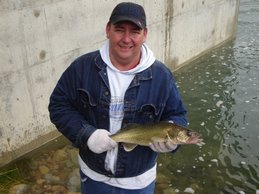
Taking great pictures of your catch may not seem that important but these are memories you want to show off forever. In this article I will try and give you some easy tips on taking great pictures of your fish.
There is nothing better than a few great looking pictures hanging in your den. The pictures of the big one that you just caught. They turn out to be great conversation pieces and in jest they even make your buddies a little jealous.
You see the pictures everyday on the internet and in magazines. You often wonder how such great pictures were snapped and you often think you have to be a professional to get pictures of that quality. While there are a lot of professionals taking pictures there are also a large amount of amateurs snapping professional looking pictures. It really is quite simple as long as you follow a couple small tips and techniques.
The most important part of your fish picture taking experience is that it is a must to use a wide angle lens. With the wide angle lens the photographer can get a closer shot of you and your prize catch. Another thing that a wide angle lens does is makes the fish look bigger than it really is. Something else to remember is to make sure the sun is behind the person that is taking the picture. This will ensure the shadows and glares are kept out of the pictures.
One last quick but very important point is to get the picture of your fish just as it gets out of the water. When you can do this it will give the picture much better quality because the water on the fish enhances the shine and brings out way better colors.
Okay I know it doesnt seem like much and it really isn’t. These couple of tips can make all the difference in the world between just a picture and a great picture. Remember when you are taking this picture it’s something you want to be able to share with your grand children and you want the picture to look as good twenty years from now as it does today.
Just remember that a bad day of fishing is always better than a good day at work.
Dale Mazurek
Dale is a self taught professional fisherman for the last 35 years. He is the successful author of his fishing blog at http://fishingtutor.blogspot.com/ you can also find two more of his very popular blogs at http://relationshiptidbits.blogspot.com/ or http://stcajo-readshortstories.blogspot.com/
There is nothing better than a few great looking pictures hanging in your den. The pictures of the big one that you just caught. They turn out to be great conversation pieces and in jest they even make your buddies a little jealous.
You see the pictures everyday on the internet and in magazines. You often wonder how such great pictures were snapped and you often think you have to be a professional to get pictures of that quality. While there are a lot of professionals taking pictures there are also a large amount of amateurs snapping professional looking pictures. It really is quite simple as long as you follow a couple small tips and techniques.
The most important part of your fish picture taking experience is that it is a must to use a wide angle lens. With the wide angle lens the photographer can get a closer shot of you and your prize catch. Another thing that a wide angle lens does is makes the fish look bigger than it really is. Something else to remember is to make sure the sun is behind the person that is taking the picture. This will ensure the shadows and glares are kept out of the pictures.
One last quick but very important point is to get the picture of your fish just as it gets out of the water. When you can do this it will give the picture much better quality because the water on the fish enhances the shine and brings out way better colors.
Okay I know it doesnt seem like much and it really isn’t. These couple of tips can make all the difference in the world between just a picture and a great picture. Remember when you are taking this picture it’s something you want to be able to share with your grand children and you want the picture to look as good twenty years from now as it does today.
Just remember that a bad day of fishing is always better than a good day at work.
Dale Mazurek
Dale is a self taught professional fisherman for the last 35 years. He is the successful author of his fishing blog at http://fishingtutor.blogspot.com/ you can also find two more of his very popular blogs at http://relationshiptidbits.blogspot.com/ or http://stcajo-readshortstories.blogspot.com/
Tuesday, June 26, 2007
Spinner-Type Lures
Many fishermen choose their lures by trial and error. They keep changing their hooks until they find something that works. I’m hoping with some of the following articles I will be able to take a lot of the guessing out of choosing your lure.
It doesn’t matter if the water is clear or murky because the spinner works in different ways to attract fish and get them biting. In clear water fish see the flash of the blades while in murky water they feel the vibrations and come looking for the hook. The nice thing about spinners is that they are relatively easy to use. You cast them and retrieve them straight because the hook does the work. And quite often when a fish hits a spinner they will usually hook themselves.
Spinner baits are a great hook for pretty much any type of fresh water fish. They will also work at any time of the year but they are especially effective in cold or warm water. This water makes the fish slow and sleepy and they really don’t want to chase anything but you can even get the blades on a spinner moving slow with a slow retrieval.
Different blades on spinners have different amounts of water resistance. A broad blade rotates at a greater angle. A large blade has greater resistance than smaller ones of the same shape. Sensitive tackle will help you feel the beat of the spinner better. Now if you don’t feel the spinner than you may be retrieving the hook too slow.
When fishing a spinner bait you want to use a stiffer rod so you can set the hook better when you get a strike. Using spinner baits for small pan fish you should use 2 to 6 pound test. For walleye and small mouth you should use 6 to 10 pound test and for bigger fish 12 to 25 pound test would be recommended.
It’s important to keep your spinner baits separated in your tackle box or you can waste valuable fishing time trying to untangle hooks when you should be fishing. Some people might disagree but I personally don’t like spinners around weed beds because I find myself spending more time getting my hooks unstuck from the weeds.
Dale Mazurek
Dale is a self taught fisherman for 35 years. He has won many different small tournament awards. You can check out his blogs at http://fishingtutor.blogspot.com/ or two more you can look at are http://affiliatemarketingfornewbies.blogspot.com/ and his newest on at http://funtidbits.blogspot.com/
It doesn’t matter if the water is clear or murky because the spinner works in different ways to attract fish and get them biting. In clear water fish see the flash of the blades while in murky water they feel the vibrations and come looking for the hook. The nice thing about spinners is that they are relatively easy to use. You cast them and retrieve them straight because the hook does the work. And quite often when a fish hits a spinner they will usually hook themselves.
Spinner baits are a great hook for pretty much any type of fresh water fish. They will also work at any time of the year but they are especially effective in cold or warm water. This water makes the fish slow and sleepy and they really don’t want to chase anything but you can even get the blades on a spinner moving slow with a slow retrieval.
Different blades on spinners have different amounts of water resistance. A broad blade rotates at a greater angle. A large blade has greater resistance than smaller ones of the same shape. Sensitive tackle will help you feel the beat of the spinner better. Now if you don’t feel the spinner than you may be retrieving the hook too slow.
When fishing a spinner bait you want to use a stiffer rod so you can set the hook better when you get a strike. Using spinner baits for small pan fish you should use 2 to 6 pound test. For walleye and small mouth you should use 6 to 10 pound test and for bigger fish 12 to 25 pound test would be recommended.
It’s important to keep your spinner baits separated in your tackle box or you can waste valuable fishing time trying to untangle hooks when you should be fishing. Some people might disagree but I personally don’t like spinners around weed beds because I find myself spending more time getting my hooks unstuck from the weeds.
Dale Mazurek
Dale is a self taught fisherman for 35 years. He has won many different small tournament awards. You can check out his blogs at http://fishingtutor.blogspot.com/ or two more you can look at are http://affiliatemarketingfornewbies.blogspot.com/ and his newest on at http://funtidbits.blogspot.com/
Tuesday, June 19, 2007
Large Mouth Bass
Fishermen from Cuba to Canada get utterly excited every time a largemouth bass strikes their hook. The fish leaps out of the water, mouth open trying to shake the hook out of its mouth and often it does.
The largemouth bass has become one of the most widely fished species in the world. This is because bass are so easy to find because of their great ability to survive any where they may be located. You will find these fish as far north as northern Canada in the great lakes; you will find them in murky back waters, small ponds and even great spawning reservoirs in Mexico.
A few other names for large mouth are Black Bass, bucket mouth or sunfish. Large mouths are actually a member of the sun fish family. Bass fan out shallow in saucer shaped nests in the spring. They usually travel in water between 2 to 4 feet deep. They spawn in bays, cuts or channels and rough water often washes away their nests.
Large mouths usually spawn when the water warms to the low- to mid-60s. Depending on where the bass are they can lay their eggs anywhere from February to mid-June. After dropping her eggs the female usually abandons the nest leaving the male there to guard until the young bass can fend for them selves. Male bass will usually strike at anything that comes near the nest. For this reason some places close fishing in certain spawning areas while the nesting season is going on.
Bass can adapt to almost any foods. That’s why they can adapt well in many bodies of water around the world. Small fish, crayfish, frogs, insect larvae, snakes, turtles, mice and even birds have been found in the stomachs of bass.
Because bass don’t like bright sunlight they usually feed early in the morning or late in the evening during the summer time. During the day they usually hang out in drop offs close to feeding areas. Fishing for bass is usually great on rainy days. Depending where you fish large mouth bass can be caught anywhere from 1 pound to 20 pounds with the world record being 22 pounds, 4 ounces in Montgomery Lake, Georgia in 1932.
Dale Mazurek
Dale is an expert self taught fisherman who has won many amateur tournaments and he has fished all over. You can check out any of his wonderful books that he promotes at http://stcajo.troutfish.hop.clickbank.net/ or http://stcajo.flyfish1.hop.clickbank.net/ and http://stcajo.betterbass.hop.clickbank.net/
The largemouth bass has become one of the most widely fished species in the world. This is because bass are so easy to find because of their great ability to survive any where they may be located. You will find these fish as far north as northern Canada in the great lakes; you will find them in murky back waters, small ponds and even great spawning reservoirs in Mexico.
A few other names for large mouth are Black Bass, bucket mouth or sunfish. Large mouths are actually a member of the sun fish family. Bass fan out shallow in saucer shaped nests in the spring. They usually travel in water between 2 to 4 feet deep. They spawn in bays, cuts or channels and rough water often washes away their nests.
Large mouths usually spawn when the water warms to the low- to mid-60s. Depending on where the bass are they can lay their eggs anywhere from February to mid-June. After dropping her eggs the female usually abandons the nest leaving the male there to guard until the young bass can fend for them selves. Male bass will usually strike at anything that comes near the nest. For this reason some places close fishing in certain spawning areas while the nesting season is going on.
Bass can adapt to almost any foods. That’s why they can adapt well in many bodies of water around the world. Small fish, crayfish, frogs, insect larvae, snakes, turtles, mice and even birds have been found in the stomachs of bass.
Because bass don’t like bright sunlight they usually feed early in the morning or late in the evening during the summer time. During the day they usually hang out in drop offs close to feeding areas. Fishing for bass is usually great on rainy days. Depending where you fish large mouth bass can be caught anywhere from 1 pound to 20 pounds with the world record being 22 pounds, 4 ounces in Montgomery Lake, Georgia in 1932.
Dale Mazurek
Dale is an expert self taught fisherman who has won many amateur tournaments and he has fished all over. You can check out any of his wonderful books that he promotes at http://stcajo.troutfish.hop.clickbank.net/ or http://stcajo.flyfish1.hop.clickbank.net/ and http://stcajo.betterbass.hop.clickbank.net/
Wednesday, June 13, 2007
Large Mouth, Where Can You Catch Them?
I consider fishing my number one expertise. In these articles I plan to share my knowledge with you and everyone out there. Some may choose to use it and some may not. Either way I hope you enjoy them and tell others about them.
For almost all their lives the large mouth will hang out in water from 5 to 15 feet deep. On occasion they will go deeper to find food or to get out of the sun. Almost always when bass are in the shallows you will find them by some sort of cover. Largemouth are very abundant in natural and man made lakes.
Natural Lakes
-Because shallow bays tend to warm faster in the spring time that is where the bass will move to. They move in there for feeding and eventually spawning.
-In the summertime the edge of weed lines is a great place to find the large mouth hiding out from the hot sunny day.
-Bays that we refer to as slop bays in the summertime will hold plenty of fish under neath the weeds. These areas are great for fisherman and great for the large mouth to find food.
-Humps in the lakes with weeds on the bottom are great places for summertime bass. The weeds and rocks offer shade that the fish can move into.
-Points and inside turns along break lines hold bass in the summer through winter. Gradually sloping structure is best in the summertime while sharp slopes are great in late fall and winter.
-The shallow flats in the late fall attract a lot of bass because they stay the warmest while the water in the lakes are starting to cool off.
Man-Made Lakes
-Old river channels tend to concentrate bass in the summer and winter. The fish move up to feed and then rest in the close by deeper water.
-Bends in river channels will hold more bass in summer than straight parts. Because the water stays warmer in the river channel it will hold large numbers of bass in the winter.
-Back ends of shallow creeks, especially with no flow have the warmest water in the springtime. Thus they draw bass in to feed and spawn.
-Submerged road beds, railroad grades, old buildings are all man made features that are important to bass and important that the fishermen know where they are.
-In the summertime you want to look for humps that are covered in weeds or fallen timbers. This is especially important if they are located near the main river channel.
-Along a creek channel or river channel with timbered flats are great areas for fishing from spring to fall. The one important factor to look at here is whether or not the fish have east access to deeper water.
In this bustling crazy world of technology we don’t always have lots to look forward to except the same old thing day in and day out. Fishing is the one great way that I use to escape all realities out there.
I just want everyone to remember that a bad day fishing is always better than a good day at work.
Dale Mazurek
Dale is a self taught professional amateur fisherman with many small tournament wins under his belt. You can check out his ever growing fishing blog at http://fishingtutor.blogspot.com/ or 2 more of his very popular blogs at http://relationshiptidbits.blogspot.com/ and http://stcajo-readshortstories.blogspot.com/
For almost all their lives the large mouth will hang out in water from 5 to 15 feet deep. On occasion they will go deeper to find food or to get out of the sun. Almost always when bass are in the shallows you will find them by some sort of cover. Largemouth are very abundant in natural and man made lakes.
Natural Lakes
-Because shallow bays tend to warm faster in the spring time that is where the bass will move to. They move in there for feeding and eventually spawning.
-In the summertime the edge of weed lines is a great place to find the large mouth hiding out from the hot sunny day.
-Bays that we refer to as slop bays in the summertime will hold plenty of fish under neath the weeds. These areas are great for fisherman and great for the large mouth to find food.
-Humps in the lakes with weeds on the bottom are great places for summertime bass. The weeds and rocks offer shade that the fish can move into.
-Points and inside turns along break lines hold bass in the summer through winter. Gradually sloping structure is best in the summertime while sharp slopes are great in late fall and winter.
-The shallow flats in the late fall attract a lot of bass because they stay the warmest while the water in the lakes are starting to cool off.
Man-Made Lakes
-Old river channels tend to concentrate bass in the summer and winter. The fish move up to feed and then rest in the close by deeper water.
-Bends in river channels will hold more bass in summer than straight parts. Because the water stays warmer in the river channel it will hold large numbers of bass in the winter.
-Back ends of shallow creeks, especially with no flow have the warmest water in the springtime. Thus they draw bass in to feed and spawn.
-Submerged road beds, railroad grades, old buildings are all man made features that are important to bass and important that the fishermen know where they are.
-In the summertime you want to look for humps that are covered in weeds or fallen timbers. This is especially important if they are located near the main river channel.
-Along a creek channel or river channel with timbered flats are great areas for fishing from spring to fall. The one important factor to look at here is whether or not the fish have east access to deeper water.
In this bustling crazy world of technology we don’t always have lots to look forward to except the same old thing day in and day out. Fishing is the one great way that I use to escape all realities out there.
I just want everyone to remember that a bad day fishing is always better than a good day at work.
Dale Mazurek
Dale is a self taught professional amateur fisherman with many small tournament wins under his belt. You can check out his ever growing fishing blog at http://fishingtutor.blogspot.com/ or 2 more of his very popular blogs at http://relationshiptidbits.blogspot.com/ and http://stcajo-readshortstories.blogspot.com/
Wednesday, June 6, 2007
Fishing Tid Bits How To Fish Part 10
This is going to be the 10th and final article of the tid bit series. I have had great response so I will be submitting a lot more fishing articles. However they will not be in a series format but rather single articles. Thank you for everyone’s great support and encouragement. Once again all I ask is that you go and enjoy the fine fun of fishing.
1. Tough Perch Bait
Sometimes when the fishing is hot you can spend more time baiting your hook then actually fishing when its perch you are after. Perch, when on a bite will steal bait from you all day long so here’s a tip that works for me. Cut a one inch long strip off the belly of a perch you caught. Split it at the half way point in two to simulate a tail. I guarantee this will be harder to steal than something like traditional maggots.
2. Soft Mouth Crappies
Anyone that has got into a day when the crappies are biting knows that it can be frustrating losing fish because of the thin membrane on a crappies mouth that quite often tears when a hook is set into it. Here’s a little trick. Take the hook that your using and bend it about ten degrees past its original bend. Chances are now that it will stick into the roof of the mouth instead of the membrane.
3. Bass Rhythm
Success or failure will be determined on what kind of rhythm you build when fishing the top of the water for bass. Where you want to build your rhythm is on hook retrieval.
4. Fishing Springs
If you know there is springs in the lake your fishing then it would be best to find out where they are. In the summer time the areas near the springs will be cooler and warmer in the winter. Not knowing thee are springs will cost you fish. It wouldn’t hurt to investigate a new lake before you go to fish it.
5. Bass Shade
Bass love shade. They love it so much that they will use each other for shade. I have made it a point to cast into any spot that has shade no matter how big or small. For this reason alone I know I catch more fish because of that reason.
This is the end of my tenth edition on the fishing tips series. It is also the end of the series. I have had great feed back so I will still be publishing fishing articles, they just won’t be in a series format but rather a random format. Thanks to all my reader for all the great comments and support. Remember to direct all your friends and family to my articles.
Always remember a bad day of fishing is better than a good day at work.
Dale Mazurek
Dale works hard to help new people to the world of making money on line. You can go to his blog at http://dalesblogs.blogspot.com/ or check out the best program on line to get started with http://InsiderBlueprint.com/?id=1347 and http://mymoneydragon.com/member.php?id=8180
1. Tough Perch Bait
Sometimes when the fishing is hot you can spend more time baiting your hook then actually fishing when its perch you are after. Perch, when on a bite will steal bait from you all day long so here’s a tip that works for me. Cut a one inch long strip off the belly of a perch you caught. Split it at the half way point in two to simulate a tail. I guarantee this will be harder to steal than something like traditional maggots.
2. Soft Mouth Crappies
Anyone that has got into a day when the crappies are biting knows that it can be frustrating losing fish because of the thin membrane on a crappies mouth that quite often tears when a hook is set into it. Here’s a little trick. Take the hook that your using and bend it about ten degrees past its original bend. Chances are now that it will stick into the roof of the mouth instead of the membrane.
3. Bass Rhythm
Success or failure will be determined on what kind of rhythm you build when fishing the top of the water for bass. Where you want to build your rhythm is on hook retrieval.
4. Fishing Springs
If you know there is springs in the lake your fishing then it would be best to find out where they are. In the summer time the areas near the springs will be cooler and warmer in the winter. Not knowing thee are springs will cost you fish. It wouldn’t hurt to investigate a new lake before you go to fish it.
5. Bass Shade
Bass love shade. They love it so much that they will use each other for shade. I have made it a point to cast into any spot that has shade no matter how big or small. For this reason alone I know I catch more fish because of that reason.
This is the end of my tenth edition on the fishing tips series. It is also the end of the series. I have had great feed back so I will still be publishing fishing articles, they just won’t be in a series format but rather a random format. Thanks to all my reader for all the great comments and support. Remember to direct all your friends and family to my articles.
Always remember a bad day of fishing is better than a good day at work.
Dale Mazurek
Dale works hard to help new people to the world of making money on line. You can go to his blog at http://dalesblogs.blogspot.com/ or check out the best program on line to get started with http://InsiderBlueprint.com/?id=1347 and http://mymoneydragon.com/member.php?id=8180
Subscribe to:
Posts (Atom)


 Add to Onlywire